Berlin's underground scene isn't just a product of taste or counterculture — it's a product of real estate. The city ended up with vast amounts of abandoned industrial space after reunification, and the combination of cheap square footage and a cultural tolerance for noise created conditions that aren't really replicable anywhere else in Europe. Paris and London have better museums. Barcelona has better weather. Berlin has 1,500-person clubs in former dog biscuit factories that run continuously from Friday night to Monday morning.
Here's what's actually worth understanding about how the scene works.
Section 1Berlin's Warehouse Clubs: Sisyphos, About Blank, and Club der Visionaere
Sisyphos is a former dog biscuit factory in Lichtenberg that opened in 2008 and runs parties from Friday through Monday across multiple indoor and outdoor floors. About Blank started as an illegal venue near Ostkreuz before going official in 2010 — it operates as a queer, anti-fascist collective and books accordingly. Club der Visionaere on the Landwehrkanal opens spontaneously in summer and closes entirely in winter, with a 50-person dance floor that's more intimate bar than traditional club. What connects them isn't just the music — it's the economic reality that space cheap enough to experiment with doesn't exist in most European cities at this scale.
The marathon format at Sisyphos and similar venues creates a temporal bubble where normal schedules stop mattering. People arrive Friday, stay Saturday, sleep somewhere on the property, keep going Sunday. It works because the physical space is large enough to accommodate it — outdoor areas, places to rest without leaving, multiple rooms at different volumes. Post-pandemic price increases have pushed some longtime regulars away, and the door policy at several venues has gotten more commercial. The scene changes. If you're planning a trip around Amsterdam's festival and music scene or other European nightlife, Berlin is a necessary detour — but go knowing the golden era of completely unregulated warehouse parties is behind us.
Section 2LED Art and Immersive Installations in Berlin
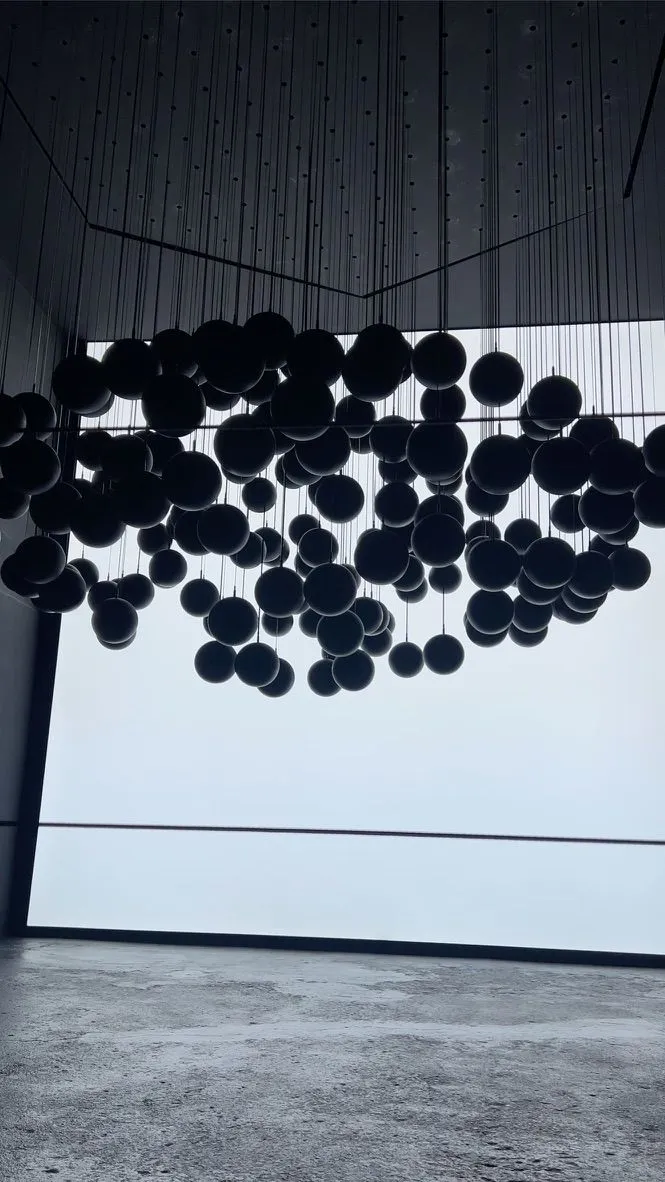
DARK MATTER opened in 2021 in a former factory in Lichtenberg, with Christopher Bauder's GRID installation spanning 1,000 square meters — 25,000 light sources, 2,000 speakers. It's the kind of scale that only exists here because Berlin has industrial buildings available at prices that would be prohibitive in cities with tighter real estate markets. Walking into GRID feels like stepping inside a synthesizer — light and sound synchronized so tightly that your brain stops separating them. The Boros Collection operates on a similar principle of repurposing massive structures: a 1942 WWII bunker converted into a 3,000-square-meter contemporary art space, access limited to guided tours that book weeks or months out. Both rely on the same thing the clubs do — abundant space and permissive attitudes toward what you do with it.
As someone who's built large-scale LED installations myself, seeing what's possible with essentially unlimited ceiling height and floor space puts every garage-scale project in perspective. The technical challenges of running 25,000 light sources are real, but Berlin gives artists something harder to find than budget: room.
Section 3Tempelhofer Feld: Berlin's Converted Airport Park
Tempelhof Airport closed in 2008 and got converted into one of the world's largest urban parks — 940 acres, around 160,000 visitors a week. A 2014 referendum specifically blocked development, keeping it as open public space. You can bike the old runways, watch people kite-surf on flat tarmac, or just walk for an hour without running out of room. It's accessible via U-Bahn from the center, which is the other thing that makes Berlin's dispersed geography work: the transit network actually connects Lichtenberg warehouses to Kreuzberg waterfront venues to a former airport without requiring a car.
Section 4What's Changing (And What Isn't)
Berlin's scene exists at the intersection of cheap space, operational affordability, and cultural acceptance of noise and irregular hours. All three are under pressure. Rents have risen significantly over the past decade. Several longtime venues have closed or shifted toward more commercial programming. The combination that produced this particular ecosystem — warehouses you could convert cheaply, a city willing to leave you alone — is harder to find now than it was in 2008.
You can still dance in a former dog biscuit factory until Monday morning, but the window is narrower than it used to be. Cities like Amsterdam and Hong Kong have their own versions of dense, layered cultural scenes — but none of them have Berlin's specific combination of post-industrial scale and institutional indifference. That's what makes it worth visiting while it still operates this way.